
| North Portland Neighborhood ServicesNEWSLETTERJanuary 4th, 2024 |
| Wishing you a happy New Year! Welcome to the NPNS Newsletter. Here we highlight exciting events, valuable resources, and amazing projects taking place in North Portland. This newsletter is published the first week of the month. If you have something you’d like us to feature, share the details with NPNS by the last Friday of the month before your event so we can make sure it gets posted. |
| NEWS & EVENTS |
 Apply Now for PIR-North Portland Advisory BoardAfter a three-year pause, the PIR-North Portland Trust Fund has amassed $120,000 in funding. NPNS seeks advisory board members from each neighborhood association to steer impactful community projects. Whether it’s noise reduction, cleaner air, or community engagement, your input matters. Apply now to shape North Portland’s future! The first advisory board meeting will be held at the end of January. Apply Here Apply Now for PIR-North Portland Advisory BoardAfter a three-year pause, the PIR-North Portland Trust Fund has amassed $120,000 in funding. NPNS seeks advisory board members from each neighborhood association to steer impactful community projects. Whether it’s noise reduction, cleaner air, or community engagement, your input matters. Apply now to shape North Portland’s future! The first advisory board meeting will be held at the end of January. Apply Here |
 Community Activities Funds AvailableThe Office of Community and Civic Life supports neighborhood associations and other community organizations through the Community Activities Fund (CAF). The CAF reimburses volunteer-run organizations in the southwest, north, east neighborhood district for money spent on community-building and civic engagement activities. Eligible organizations in these areas are invited to apply. Community Activities Funds AvailableThe Office of Community and Civic Life supports neighborhood associations and other community organizations through the Community Activities Fund (CAF). The CAF reimburses volunteer-run organizations in the southwest, north, east neighborhood district for money spent on community-building and civic engagement activities. Eligible organizations in these areas are invited to apply.Applications are open through May 31 or until funds are gone, whichever comes first. This is a reimbursement program for expenses incurred from June 1, 2023, and May 31, 2024.Learn More |
 Basic Net Training Registration Serve as a crucial part of Portland’s safety net by becoming a Neighborhood Emergency Team (NET) volunteer. The next free training cohort will run January 13 though February 4 on a flexible weekend schedule. NET volunteers are trained to safely assist Portlanders with downed power lines, home fire evacuations, Rose Festival events, or a catastrophic earthquake. Join 2,000+ NET members and learn how to save lives and property. The NET program is run by the Portland Bureau of Emergency Management’s Community Resilience Team.Learn More Basic Net Training Registration Serve as a crucial part of Portland’s safety net by becoming a Neighborhood Emergency Team (NET) volunteer. The next free training cohort will run January 13 though February 4 on a flexible weekend schedule. NET volunteers are trained to safely assist Portlanders with downed power lines, home fire evacuations, Rose Festival events, or a catastrophic earthquake. Join 2,000+ NET members and learn how to save lives and property. The NET program is run by the Portland Bureau of Emergency Management’s Community Resilience Team.Learn More |
 Final Online Open House and Survey Now AvailableThe North Portland in Motion team invites feedback on project and program recommendations after two years of analysis and community engagement. The online open house and survey, available until January 31, showcases refined project descriptions, policy and program recommendations, and longer-term considerations. The draft plan will be released in early 2024, with council adoption expected in mid-2024. Anticipate the implementation of several projects on the ground throughout 2024. Learn More Final Online Open House and Survey Now AvailableThe North Portland in Motion team invites feedback on project and program recommendations after two years of analysis and community engagement. The online open house and survey, available until January 31, showcases refined project descriptions, policy and program recommendations, and longer-term considerations. The draft plan will be released in early 2024, with council adoption expected in mid-2024. Anticipate the implementation of several projects on the ground throughout 2024. Learn More |
 Candidate Learning SessionsLearn how to run for a City of Portland office. The City Elections Office is hosting learning sessions to help you understand the nuances of running for office in our city. Learning sessions will be held in person on January 8, and online on January 10. Learn More Candidate Learning SessionsLearn how to run for a City of Portland office. The City Elections Office is hosting learning sessions to help you understand the nuances of running for office in our city. Learning sessions will be held in person on January 8, and online on January 10. Learn More |
 Summer Free Summer FreeFor All Applications OpenEach year, Summer Free For All Cultural Events partners with community groups, artists, nonprofits, culturally-specific groups, and others to produce free concerts, movies, and events throughout Portland. If you are looking to bring an amazing event to your community, SFFA is ready to help. Applications are due January 15. Learn More |
 Vanport History AudioboxesThe Vanport Placemaking Project has installed audio boxes around Portland to share the history of Vanport with more Portlanders. The exhibit features the voices and stories of 18 original Vanport residents. The stories tell listeners about everyday life in Vanport, work in the WWII shipyards, the traumatic flood of 1948, and more. They are located in downtown Portland at the Park Blocks entrance to Lincoln Hall and on the south side of Force Lake, a historic Vanport site. Learn More Vanport History AudioboxesThe Vanport Placemaking Project has installed audio boxes around Portland to share the history of Vanport with more Portlanders. The exhibit features the voices and stories of 18 original Vanport residents. The stories tell listeners about everyday life in Vanport, work in the WWII shipyards, the traumatic flood of 1948, and more. They are located in downtown Portland at the Park Blocks entrance to Lincoln Hall and on the south side of Force Lake, a historic Vanport site. Learn More |
 DEQ Seeks Public Input The Department of Environmental Quality (DEQ) is inviting public input on proposed amendments to OAR 340-141-0290, aiming to establish a “per tank fee” on oil-filled train cars entering Oregon. The proposed fee, set at $19 per rail car as mandated by ORS 468B.435 (13)(c), will be utilized for high hazard rail route training exercises/ DEQ welcomes comments via email, postal mail or at a public hearing on January 16. The deadline for comments is 4 pm on January 22. The rulemaking supports DEQ’s statutory obligation, addressing environmental concerns related to oil transport. Learn More DEQ Seeks Public Input The Department of Environmental Quality (DEQ) is inviting public input on proposed amendments to OAR 340-141-0290, aiming to establish a “per tank fee” on oil-filled train cars entering Oregon. The proposed fee, set at $19 per rail car as mandated by ORS 468B.435 (13)(c), will be utilized for high hazard rail route training exercises/ DEQ welcomes comments via email, postal mail or at a public hearing on January 16. The deadline for comments is 4 pm on January 22. The rulemaking supports DEQ’s statutory obligation, addressing environmental concerns related to oil transport. Learn More |
| Resources |
 Update your Neighborhood Association Contacts Is your neighborhood association contact information up-to-date? If there have been changes to your contact details or leadership roles within your neighborhood association, please take a moment to provide us with the latest information. Keeping our database current helps us maintain effective communication, ensuring timely updates, event invitations, and important announcements. Thank you for helping us keep our neighborhood association contacts accurate and relevant! Update Contacts Update your Neighborhood Association Contacts Is your neighborhood association contact information up-to-date? If there have been changes to your contact details or leadership roles within your neighborhood association, please take a moment to provide us with the latest information. Keeping our database current helps us maintain effective communication, ensuring timely updates, event invitations, and important announcements. Thank you for helping us keep our neighborhood association contacts accurate and relevant! Update Contacts |
 North Portland Events CalendarThe North Portland Events Calendar, coordinated by Kevin Micalizzi of Arbor Lodge, is a centralized Google Calendar aimed to boost community engagement by showcasing and coordinating events from various neighborhood associations. Become an editor to add your events. For invitations, email Kevin at kevin@arborlodgeneigborhood.com. Let’s make our events shine together! Thank you, Kevin, for this fantastic initiative!View Events Calendar North Portland Events CalendarThe North Portland Events Calendar, coordinated by Kevin Micalizzi of Arbor Lodge, is a centralized Google Calendar aimed to boost community engagement by showcasing and coordinating events from various neighborhood associations. Become an editor to add your events. For invitations, email Kevin at kevin@arborlodgeneigborhood.com. Let’s make our events shine together! Thank you, Kevin, for this fantastic initiative!View Events Calendar |
 Zoning & Land UsePublic notices for North PortlandView Public Notices Zoning & Land UsePublic notices for North PortlandView Public Notices |
 NPLUG+TNPLUG+T is a forum for land use and transportation. Representatives from the Bureau of Transportation, Planning and Sustainability, and Development Services are invited to provide updates, trainings and presentations on projects impacting North Portland. Hybrid meetings are typically held at The Historic Kenton Firehouse the last Thursday of the month 7 – 8:30 pm. Join Zoom Meeting NPLUG+TNPLUG+T is a forum for land use and transportation. Representatives from the Bureau of Transportation, Planning and Sustainability, and Development Services are invited to provide updates, trainings and presentations on projects impacting North Portland. Hybrid meetings are typically held at The Historic Kenton Firehouse the last Thursday of the month 7 – 8:30 pm. Join Zoom Meeting |
 NPNS ChairsNeighborhood association chairs from North Portland come together to share insights and updates on a wide range of topics, from urban development and sustainability to social initiatives that enhance our neighborhoods. All are welcome to attend. Hybrid meetings are held at the Historic Kenton Firehouse on the first Monday of the month from 6 – 8 pm. Join Zoom Meeting NPNS ChairsNeighborhood association chairs from North Portland come together to share insights and updates on a wide range of topics, from urban development and sustainability to social initiatives that enhance our neighborhoods. All are welcome to attend. Hybrid meetings are held at the Historic Kenton Firehouse on the first Monday of the month from 6 – 8 pm. Join Zoom Meeting |
 Portland COAD The Portland Community Organizations Active in Disaster (COAD) is a network of community organizations that prepare for and respond to emergencies and disasters like heatwaves, winter weather and earthquakes. Many COAD partners are a trusted source of information for their communities and are providing lifeline services every week. Virtual meetings are held the first Tuesday of the month from 3 – 4 pm. Join Zoom Meeting Portland COAD The Portland Community Organizations Active in Disaster (COAD) is a network of community organizations that prepare for and respond to emergencies and disasters like heatwaves, winter weather and earthquakes. Many COAD partners are a trusted source of information for their communities and are providing lifeline services every week. Virtual meetings are held the first Tuesday of the month from 3 – 4 pm. Join Zoom Meeting |
 PSACPublic Safety Action Committee (PSAC) is a monthly meeting held to address local North Portland resident and business concerns related to public safety and livability issues. Virtual meetings are held the third Thursday of the month from 7 – 8:30 pm. Subscribe to Mailing List PSACPublic Safety Action Committee (PSAC) is a monthly meeting held to address local North Portland resident and business concerns related to public safety and livability issues. Virtual meetings are held the third Thursday of the month from 7 – 8:30 pm. Subscribe to Mailing List |
| Neighborhood Association Meetings |
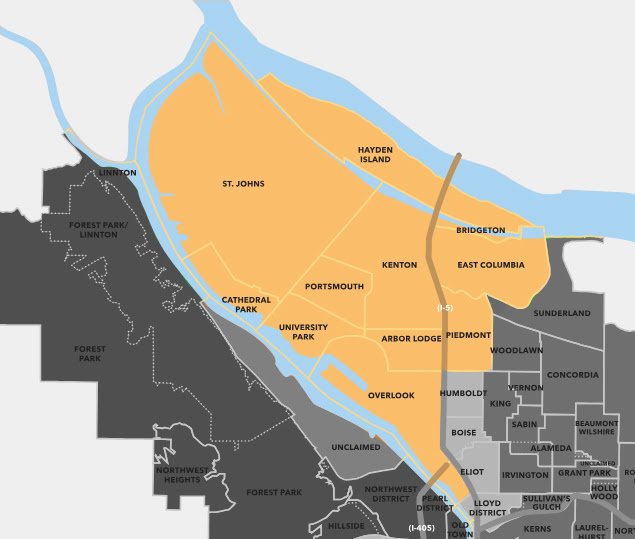
| Confirm scheduled meetings, locations, and instructions to join virtual meetings by clicking on the neighborhood |
| Arbor LodgeThursday, January 18, 7 pmOverlook Monday, January 8, 6 pm |
| BridgetonTuesday, January 9, 6:30 pm (Board Meeting)PiedmontThursday, January 18, 7 pm |
| Cathedral Park Tuesday, January 9, 7 pm PortsmouthMonday, January 8, 5:30 pm (Board Meeting) |
| East ColumbiaTuesday, February 12, 7 pmSt. JohnsMonday, January 8, 7 pm |
| Hayden IslandThursday, January 11, 7 pmUniversity Park Monday, January 8, 7 pm (Board Meeting) |
| Kenton Wednesday, January 10, 7 pm (Board Meeting) |
 |
 Copyright (C) 2024 Office of Community & Civic Life. All rights reserved. Copyright (C) 2024 Office of Community & Civic Life. All rights reserved. |
Category Archives: Uncategorized
| North Portland Neighborhood ServicesNEWSLETTERDecember 20, 2023 |
| Welcome to the NPNS Newsletter. Here we highlight exciting events, valuable resources, and amazing projects taking place in North Portland. If you have something you’d like us to feature, share the details with NPNS by the last Friday of the month before your event so we can make sure it gets posted. |
| NEWS & EVENTS |
 Happy Holidays from NPNSAs the festive season unfolds, we extend warm wishes of joy and cheer to our incredible community. Thank you for being part of NPNS. Here’s to a season of happiness and a new year filled with possibilities. Happy Holidays! Happy Holidays from NPNSAs the festive season unfolds, we extend warm wishes of joy and cheer to our incredible community. Thank you for being part of NPNS. Here’s to a season of happiness and a new year filled with possibilities. Happy Holidays! |
 Small Grants & Sponsorships Awards AnnouncedThe Office of Community & Civic Life awarded a total of $32,180 to nine community groups serving North Portland. Congratulations to Jefferson High PTSA, Sauvie Island Center, Royal Rose Foundation, Chief Joseph Elementary School PTO, Lavender League, St. Johns Swap n Play, Freinds of Ours, Columbia Slough Watershed Council, and the North Portland Tool Library. Small Grants & Sponsorships Awards AnnouncedThe Office of Community & Civic Life awarded a total of $32,180 to nine community groups serving North Portland. Congratulations to Jefferson High PTSA, Sauvie Island Center, Royal Rose Foundation, Chief Joseph Elementary School PTO, Lavender League, St. Johns Swap n Play, Freinds of Ours, Columbia Slough Watershed Council, and the North Portland Tool Library. |
 Newsletter AnnouncementStarting January, our newsletter will shift from bi-monthly to monthly. Please be sure to send any announcements or events for the upcoming month by the last Friday of the month prior to your event. Newsletter AnnouncementStarting January, our newsletter will shift from bi-monthly to monthly. Please be sure to send any announcements or events for the upcoming month by the last Friday of the month prior to your event. |
 Apply Now for PIR-North Portland Advisory BoardAfter a three-year pause, the PIR-North Portland Trust Fund has amassed $120,000 in funding. NPNS seeks advisory board members from each neighborhood association to steer impactful community projects. Whether it’s noise reduction, cleaner air, or community engagement, your input matters. Apply now to shape North Portland’s future! The first advisory board meeting will be held at the end of January. Apply Here Apply Now for PIR-North Portland Advisory BoardAfter a three-year pause, the PIR-North Portland Trust Fund has amassed $120,000 in funding. NPNS seeks advisory board members from each neighborhood association to steer impactful community projects. Whether it’s noise reduction, cleaner air, or community engagement, your input matters. Apply now to shape North Portland’s future! The first advisory board meeting will be held at the end of January. Apply Here |
 Portland Winter Ice Rink is OpenThe Portland Winter Ice Rink and Woodsy Winter Village has opened in downtown Portland. The Winter Village is open 12 pm to 8 pm through December with modified hours in January. Learn More Portland Winter Ice Rink is OpenThe Portland Winter Ice Rink and Woodsy Winter Village has opened in downtown Portland. The Winter Village is open 12 pm to 8 pm through December with modified hours in January. Learn More |
 Summer Free Summer FreeFor All Applications OpenEach year, Summer Free For All Cultural Events partners with community groups, artists, nonprofits, culturally-specific groups, and others to produce free concerts, movies, and events throughout Portland. If you are looking to bring an amazing event to your community, SFFA is ready to help. Applications are due January 15, 2024. Learn More |
 Major Funding Boost Secured for North Portland Aquatic CenterCommissioner Dan Ryan allocates an additional $59.8 million in Park System Development Charges for the North Portland Aquatic Center, securing $91.5 million of the $102 million needed. The project includes a 35-meter “fast” pool, meeting increased demand for lap lanes and school aquatics programming. Learn More Major Funding Boost Secured for North Portland Aquatic CenterCommissioner Dan Ryan allocates an additional $59.8 million in Park System Development Charges for the North Portland Aquatic Center, securing $91.5 million of the $102 million needed. The project includes a 35-meter “fast” pool, meeting increased demand for lap lanes and school aquatics programming. Learn More |
 Vanport History AudioboxesThe Vanport Placemaking Project has installed audio boxes around Portland to share the history of Vanport with more Portlanders. The exhibit features the voices and stories of 18 original Vanport residents. The stories tell listeners about everyday life in Vanport, work in the WWII shipyards, the traumatic flood of 1948, and more. They are located in downtown Portland at the Park Blocks entrance to Lincoln Hall and on the south side of Force Lake, a historic Vanport site. Learn More Vanport History AudioboxesThe Vanport Placemaking Project has installed audio boxes around Portland to share the history of Vanport with more Portlanders. The exhibit features the voices and stories of 18 original Vanport residents. The stories tell listeners about everyday life in Vanport, work in the WWII shipyards, the traumatic flood of 1948, and more. They are located in downtown Portland at the Park Blocks entrance to Lincoln Hall and on the south side of Force Lake, a historic Vanport site. Learn More |
 ODOT Invests in U.S. 30 CorridorODOT is improving the corridor by designing and construction six projects. The $38 million investment aims to increase safety, preserve roads and bridges, build protections for rivers, fish and public health. Learn More ODOT Invests in U.S. 30 CorridorODOT is improving the corridor by designing and construction six projects. The $38 million investment aims to increase safety, preserve roads and bridges, build protections for rivers, fish and public health. Learn More |
 Candidate Learning SessionsLearn how to run for a City of Portland office. The City Elections Office is hosting to help you understand the nuances of running for office in our city. Learning sessions will be held in person on January 8, and online on January 10. Learn More Candidate Learning SessionsLearn how to run for a City of Portland office. The City Elections Office is hosting to help you understand the nuances of running for office in our city. Learning sessions will be held in person on January 8, and online on January 10. Learn More |
 DEQ Seeks Public Input The Department of Environmental Quality (DEQ) is inviting public input on proposed amendments to OAR 340-141-0290, aiming to establish a “per tank fee” on oil-filled train cars entering Oregon. The proposed fee, set at $19 per rail car as mandated by ORS 468B.435 (13)(c), will be utilized for high hazard rail route training exercises/ DEQ welcomes comments via email, postal mail or at a public hearing on January 16, 2024. The deadline for comments is 4 pm on January 22, 2024. The rulemaking supports DEQ’s statutory obligation, addressing environmental concerns related to oil transport. Learn More DEQ Seeks Public Input The Department of Environmental Quality (DEQ) is inviting public input on proposed amendments to OAR 340-141-0290, aiming to establish a “per tank fee” on oil-filled train cars entering Oregon. The proposed fee, set at $19 per rail car as mandated by ORS 468B.435 (13)(c), will be utilized for high hazard rail route training exercises/ DEQ welcomes comments via email, postal mail or at a public hearing on January 16, 2024. The deadline for comments is 4 pm on January 22, 2024. The rulemaking supports DEQ’s statutory obligation, addressing environmental concerns related to oil transport. Learn More |
 North Lombard Street TransformationODOT’s Great Street Program announced four projects that have been selected to share the remaining $36 million from the Infrastructure Investment and Jobs Act including improvements to N. Lombard Street. Enhancements include extending sidewalks, protected bike lanes, replacing turn lanes with green stormwater treatment areas, and pedestrian plaza intersection safety improvements. Learn More North Lombard Street TransformationODOT’s Great Street Program announced four projects that have been selected to share the remaining $36 million from the Infrastructure Investment and Jobs Act including improvements to N. Lombard Street. Enhancements include extending sidewalks, protected bike lanes, replacing turn lanes with green stormwater treatment areas, and pedestrian plaza intersection safety improvements. Learn More |
| Resources |
 North Portland Events CalendarIntroducing the North Portland Events Calendar! Coordinated by Kevin Micalizzi of Arbor Lodge, this centralized Google Calendar aims to boost community engagement by showcasing and coordinating events from various neighborhood associations. Become an editor to add your events. For invitations, email Kevin at kevin@arborlodgeneigborhood.com. Let’s make our events shine together! Thank you, Kevin, for this fantastic initiative!View Events Calendar North Portland Events CalendarIntroducing the North Portland Events Calendar! Coordinated by Kevin Micalizzi of Arbor Lodge, this centralized Google Calendar aims to boost community engagement by showcasing and coordinating events from various neighborhood associations. Become an editor to add your events. For invitations, email Kevin at kevin@arborlodgeneigborhood.com. Let’s make our events shine together! Thank you, Kevin, for this fantastic initiative!View Events Calendar |
 Zoning & Land UsePublic notices for North PortlandView Public Notices Zoning & Land UsePublic notices for North PortlandView Public Notices |
 NPLUG+TNPLUG+T is a forum for land use and transportation. Representatives from the Bureau of Transportation, Planning and Sustainability, and Development Services are invited to provide updates, trainings and presentations on projects impacting North Portland. Hybrid meetings are typically held at The Historic Kenton Firehouse the last Thursday of the month 7 – 8:30 pm. Join Zoom Meeting NPLUG+TNPLUG+T is a forum for land use and transportation. Representatives from the Bureau of Transportation, Planning and Sustainability, and Development Services are invited to provide updates, trainings and presentations on projects impacting North Portland. Hybrid meetings are typically held at The Historic Kenton Firehouse the last Thursday of the month 7 – 8:30 pm. Join Zoom Meeting |
 NPNS ChairsNeighborhood association chairs from North Portland come together to share insights and updates on a wide range of topics, from urban development and sustainability to social initiatives that enhance our neighborhoods. All are welcome to attend. Hybrid meetings are held at the Historic Kenton Firehouse on the first Monday of the month from 6 – 8 pm. Join Zoom Meeting NPNS ChairsNeighborhood association chairs from North Portland come together to share insights and updates on a wide range of topics, from urban development and sustainability to social initiatives that enhance our neighborhoods. All are welcome to attend. Hybrid meetings are held at the Historic Kenton Firehouse on the first Monday of the month from 6 – 8 pm. Join Zoom Meeting |
 Portland COAD The Portland Community Organizations Active in Disaster (COAD) is a network of community organizations that prepare for and respond to emergencies and disasters like heatwaves, winter weather and earthquakes. Many COAD partners are a trusted source of information for their communities and are providing lifeline services every week. Virtual meetings are held the first Tuesday of the month from 3 – 4 pm. Join Zoom Meeting Portland COAD The Portland Community Organizations Active in Disaster (COAD) is a network of community organizations that prepare for and respond to emergencies and disasters like heatwaves, winter weather and earthquakes. Many COAD partners are a trusted source of information for their communities and are providing lifeline services every week. Virtual meetings are held the first Tuesday of the month from 3 – 4 pm. Join Zoom Meeting |
 PSACPublic Safety Action Committee (PSAC) is a monthly meeting held to address local North Portland resident and business concerns related to public safety and livability issues. Virtual meetings are held the third Thursday of the month from 7 – 8:30 pm. Subscribe to Mailing List PSACPublic Safety Action Committee (PSAC) is a monthly meeting held to address local North Portland resident and business concerns related to public safety and livability issues. Virtual meetings are held the third Thursday of the month from 7 – 8:30 pm. Subscribe to Mailing List |
| Neighborhood Association Meetings |
| Confirm scheduled meetings, locations, and instructions to join virtual meetings by clicking on the neighborhood |
| Arbor LodgeThursday, December 21, 7 pmOverlook Monday, January 8, 6 pm |
| BridgetonTuesday, January 9, 6:30 pm (Board Meeting)PiedmontThursday, December 21, 7 pm |
| Cathedral Park Tuesday, January 9, 7 pm PortsmouthMonday, January 8, 5:30 pm (Board Meeting) |
| East ColumbiaTuesday, February 12, 7 pmSt. JohnsMonday, January 8, 7 pm |
| Hayden IslandThursday, January 11, 7 pmUniversity Park Monday, January 8, 7 pm (Board Meeting) |
| Kenton Wednesday, January 10, 7 pm (Board Meeting) |
 |
 Copyright (C) 2023 Office of Community & Civic Life. All rights reserved. Copyright (C) 2023 Office of Community & Civic Life. All rights reserved.You are receiving this email because you are a valued partner. Our mailing address is: Office of Community & Civic Life 1120 SW 5th Avenue, Suite 114 Portland, OR 97204-1900 USA |
 |
Planting and Stewardship Events in North and Northeast Portland – Winter/Spring 2024Hello!You are receiving this email because you have volunteered for the PP&R Volunteer Stewardship program in in the Columbia Slough watershed in the past. The Columbia Slough watershed is the geographic area which includes much of North and Northeast Portland. With your help, we have successfully planted thousands of shrubs and trees, mulched and cared for recently planted plants, picked up hundreds of pounds of trash, and removed weedy vegetation in parks and natural areas like Kelley Point, Whitaker Ponds, and more. All of your efforts help create habitat for wildlife, keep the Columbia Slough clean, and help preserve and enhance nature in the city, which of course makes the Portland better for us humans too! Thank you so much! ‘Tis the season to have fun in the mud! The PP&R Stewardship Program hosts volunteer events all over Portland (check out our events calendar here). We host events year-round, all over the city! More events are added throughout the year, so check our calendar frequently. Below, I’ve listed specific opportunities in North and Northeast Portland. Come on your own or bring your friends and family! Unless otherwise listed, all events run 10am-1pm. Click on the links for more information, and to register: Jan 13, 2024: Planting event at Columbia Slough Natural Area, in partnership with Friends of Trees. Jan 20, 2024: Planting event at Johnson Lake Natural Area, in partnership with Columbia Slough Watershed Council. Jan 27, 2024: Planting event at Columbia Children’s Arboretum, in partnership with Friends of Trees and Friends of Columbia Children’s Arboretum. Feb 3, 2024: Planting Event at Gateway Green, in partnership with Friends of Trees. Feb 10, 2024: Planting event at Whitaker Ponds Nature Park, in partnership with Columbia Slough Watershed Council and Bark. Feb 24, 2024: Planting event at Wilkes Creek Headwaters, in partnership with Columbia Slough Watershed Council and Bark. March 2, 2024: Planting event at Kelley Point Park, in partnership with Friends of Trees and 7 Nations Canoe Family. March 9, 2024: Planting Event at Gateway Green, in partnership with Friends of Trees. March 23, 2024: Stewardship event at Kelley Point Park, in partnership with Columbia Slough Watershed Council and Bark. April 6, 2024: Stewardship event at Columbia Slough Natural Area, in partnership with Friends of Trees. April 20, 2024: Greening Wilkes – Earth Day Event, in partnership with Friends of Trees, Columbia Slough Watershed Council, Verde, and Audubon. 3rd Saturdays – September through May: Join Friends of Baltimore Woods for stewardship work parties from 9-12pm. Gloves, tools, snacks and coffee and tea are provided at all events. No experience necessary! Please register ahead of time by clicking on the links above, or emailing/calling the contact listed on the event page. All ages are welcome. Feel free to invite your friends, co-workers, and family! A note about accessibility: All projects involve work on uneven and potentially wet and muddy ground. Some sites require more walking than others. If you have any questions about any of the projects, or need any accommodations, please contact the staff listed on the event page.See you outside!  |
| Yoko SilkStewardship Coordinator | City Nature City Wide | Lands Stewardship Division 503-278-1341 (mobile) yoko.silk@portlandoregon.gov(yo hablo español) 1120 SW Fifth Ave #1302 • Portland, OR Portland Parks & Recreation • www.portland.gov/parksDirector Adena Long |
North Portland Neighborhood ServicesNEWSLETTERDecember 6, 2023Welcome to the NPNS Newsletter! Our main goal with this newsletter is to shine a spotlight on the exciting events, valuable resources, and amazing projects taking place in North Portland. If you have something you’d like us to feature, please don’t hesitate to share the details with Summar Money at least 2 weeks before your event so we can make sure it gets the attention it deserves! NEWS & EVENTS Council Chambers in City Hall are Closed for RenovationsMembers of city council will attend meetings virtually. Community members can watch meetings and provide testimony in the Lizzie Weeks Room at the Portland Building. Community members can view the broadcast of this meeting on the City’s YouTube Channel, the OpenSignal website, and Xfinity Channel 30 and 330. Send questions to CouncilClerk@PortlandOregon.gov. Click below to view the City Council schedule, agendas, and public testimony instructions. Learn More Council Chambers in City Hall are Closed for RenovationsMembers of city council will attend meetings virtually. Community members can watch meetings and provide testimony in the Lizzie Weeks Room at the Portland Building. Community members can view the broadcast of this meeting on the City’s YouTube Channel, the OpenSignal website, and Xfinity Channel 30 and 330. Send questions to CouncilClerk@PortlandOregon.gov. Click below to view the City Council schedule, agendas, and public testimony instructions. Learn More  IBR Hosted Virtual Public BriefingThe Interstate Bridge Replacement (IBR) program is excited to invite you to learn about what is happening with the program and ways to engage at a virtual public briefing Thursday, December 7, from 6 – 7:30 pm. Attendees have an opportunity to submit questions before and during the event. A written response will be provided for topics that are not addressed during the briefing. Please register for the meeting in advance. Register Here IBR Hosted Virtual Public BriefingThe Interstate Bridge Replacement (IBR) program is excited to invite you to learn about what is happening with the program and ways to engage at a virtual public briefing Thursday, December 7, from 6 – 7:30 pm. Attendees have an opportunity to submit questions before and during the event. A written response will be provided for topics that are not addressed during the briefing. Please register for the meeting in advance. Register Here  Ugly Sweater Events in St. JohnsJoin your neighbors as we light up St. Johns for the holidays! The Boosters and local businesses present a series of celebrations to revel in the most festive of seasons with Ugly Sweater Events. Don your best ugly sweater and have a cheers with your neighbors at the Ugly Sweater Bar Crawl on December 9, starting at Leisure Public House at 6 pm. Learn More HOLIDAY CHEER Ugly Sweater Events in St. JohnsJoin your neighbors as we light up St. Johns for the holidays! The Boosters and local businesses present a series of celebrations to revel in the most festive of seasons with Ugly Sweater Events. Don your best ugly sweater and have a cheers with your neighbors at the Ugly Sweater Bar Crawl on December 9, starting at Leisure Public House at 6 pm. Learn More HOLIDAY CHEER Bridgeton Neighborhood Association Holiday CheerJoin the Bridgeton Neighborhood Association in spreading Holiday Cheer at a local institution, Jubitz Ponderosa Lounge & Grill, (VIP area) 10350 N. Vancouver Way. Activities include a no host bar, complimentary appetizers, and an optional gift exchange (bring a gift – take one home). December 12, 6:30 – 8:30 pmLearn More Bridgeton Neighborhood Association Holiday CheerJoin the Bridgeton Neighborhood Association in spreading Holiday Cheer at a local institution, Jubitz Ponderosa Lounge & Grill, (VIP area) 10350 N. Vancouver Way. Activities include a no host bar, complimentary appetizers, and an optional gift exchange (bring a gift – take one home). December 12, 6:30 – 8:30 pmLearn More  Kenton Holiday WalkMeet your neighbors at the corner of N. Brandon & N. Terry on December 15 at 5:30 pm to stroll through the neighborhood and business district to enjoy the store displays and lights. Finish the night with cookies and cocoa at the corner of N. Kilpatrick & N. Denver Kenton Holiday WalkMeet your neighbors at the corner of N. Brandon & N. Terry on December 15 at 5:30 pm to stroll through the neighborhood and business district to enjoy the store displays and lights. Finish the night with cookies and cocoa at the corner of N. Kilpatrick & N. Denver  PIR Winter WonderlandExperience the Pacific Northwest’s premier holiday light show, Winter Wonderland, touted as the “Largest Holiday Light Show West of the Mississippi” since 1993. Enjoy over 250 vibrant light set pieces and animated scenes during this spectacular drive-through event, supporting Sunshine Division’s hunger relief efforts for Portland families in need. Event goes through December 31. Dates and times vary. Click below for more info. Learn more PIR Winter WonderlandExperience the Pacific Northwest’s premier holiday light show, Winter Wonderland, touted as the “Largest Holiday Light Show West of the Mississippi” since 1993. Enjoy over 250 vibrant light set pieces and animated scenes during this spectacular drive-through event, supporting Sunshine Division’s hunger relief efforts for Portland families in need. Event goes through December 31. Dates and times vary. Click below for more info. Learn more  Shape the Future of Public ArtPlease share your opinions to inform the Portland City Council’s decision about the fate of five monuments that were toppled or removed in 2020. Community Members will play an important role in shaping the future of monuments in our city. To stay up-to-date on next steps and additional engagement opportunities, subscribe to the City Arts Program Newsletter or visit Portland.gov/Monuments. Take Survey Shape the Future of Public ArtPlease share your opinions to inform the Portland City Council’s decision about the fate of five monuments that were toppled or removed in 2020. Community Members will play an important role in shaping the future of monuments in our city. To stay up-to-date on next steps and additional engagement opportunities, subscribe to the City Arts Program Newsletter or visit Portland.gov/Monuments. Take Survey  Oregon Economic Outlook: Stability Amongst Challenges in the December ForecastIn Oregon’s latest economic update, the December revenue forecast points to a stable economy with low inflation and unemployment. Lawmakers gear up for the 2024 session, focusing on critical issues like the drug addiction crisis, homelessness, and childcare. The report reveals more people leaving the state in 2022, prompting bipartisan efforts for a safer and more affordable Oregon.Read Report Here Oregon Economic Outlook: Stability Amongst Challenges in the December ForecastIn Oregon’s latest economic update, the December revenue forecast points to a stable economy with low inflation and unemployment. Lawmakers gear up for the 2024 session, focusing on critical issues like the drug addiction crisis, homelessness, and childcare. The report reveals more people leaving the state in 2022, prompting bipartisan efforts for a safer and more affordable Oregon.Read Report Here  Free North Portland Pass Starting December 1, all North Portland residents are eligible for a free North Portland Pass at Matt Dishman Community Center. This pass allows free access to the center’s fitness room and drop-in pool activities. Learn More Resources North Portland Events CalendarIntroducing the North Portland Events Calendar! Coordinated by Kevin Micalizzi of Arbor Lodge, this centralized Google Calendar aims to boost community engagement by showcasing and coordinating events from various neighborhood associations. Become an editor to add your events. For invitations, email Kevin at kevin@arborlodgeneigborhood.com. Let’s make our events shine together! Thank you, Kevin, for this fantastic initiative!View Events Calendar Zoning & Land UsePublic notices for North PortlandView Public Notices NPLUG+TNPLUG+T is a forum for land use and transportation. Representatives from the Bureau of Transportation, Planning and Sustainability, and Development Services are invited to provide updates, trainings and presentations on projects impacting North Portland. Hybrid meetings are typically held at The Historic Kenton Firehouse the last Thursday of the month 7 – 8:30 pm. The December NPLUG+T meeting will be held on December 6, 7 – 8:30 pm. Join Zoom Meeting NPNS ChairsNeighborhood association chairs from North Portland come together to share insights and updates on a wide range of topics, from urban development and sustainability to social initiatives that enhance our neighborhoods. All are welcome to attend. Hybrid meetings are held at the Historic Kenton Firehouse on the first Monday of the month from 6 – 8 pm. Join Zoom Meeting Portland COAD The Portland Community Organizations Active in Disaster (COAD) is a network of community organizations that prepare for and respond to emergencies and disasters like heatwaves, winter weather and earthquakes. Many COAD partners are a trusted source of information for their communities and are providing lifeline services every week. Virtual meetings are held the first Tuesday of the month from 3 – 4 pm. Join Zoom Meeting PSACPublic Safety Action Committee (PSAC) is a monthly meeting held to address local North Portland resident and business concerns related to public safety and livability issues. Virtual meetings are held the third Thursday of the month from 7 – 8:30 pm. Subscribe to Mailing List Neighborhood Association Meetings Confirm scheduled meetings, locations, and instructions to join virtual meetings by clicking on the neighborhoodArbor LodgeThursday, December 21, 7 pmOverlook No General Meeting in DecemberBridgetonTuesday, December 12, 6:30 pm (Board Meeting)PiedmontThursday, December 21, 7 pm Cathedral Park Tuesday, December 12, 7 pm PortsmouthMonday, December 11, 5:30 pm (Board Meeting)East ColumbiaWednesday, December 13, 7 pmSt. JohnsMonday, December 11, 7 pm Free North Portland Pass Starting December 1, all North Portland residents are eligible for a free North Portland Pass at Matt Dishman Community Center. This pass allows free access to the center’s fitness room and drop-in pool activities. Learn More Resources North Portland Events CalendarIntroducing the North Portland Events Calendar! Coordinated by Kevin Micalizzi of Arbor Lodge, this centralized Google Calendar aims to boost community engagement by showcasing and coordinating events from various neighborhood associations. Become an editor to add your events. For invitations, email Kevin at kevin@arborlodgeneigborhood.com. Let’s make our events shine together! Thank you, Kevin, for this fantastic initiative!View Events Calendar Zoning & Land UsePublic notices for North PortlandView Public Notices NPLUG+TNPLUG+T is a forum for land use and transportation. Representatives from the Bureau of Transportation, Planning and Sustainability, and Development Services are invited to provide updates, trainings and presentations on projects impacting North Portland. Hybrid meetings are typically held at The Historic Kenton Firehouse the last Thursday of the month 7 – 8:30 pm. The December NPLUG+T meeting will be held on December 6, 7 – 8:30 pm. Join Zoom Meeting NPNS ChairsNeighborhood association chairs from North Portland come together to share insights and updates on a wide range of topics, from urban development and sustainability to social initiatives that enhance our neighborhoods. All are welcome to attend. Hybrid meetings are held at the Historic Kenton Firehouse on the first Monday of the month from 6 – 8 pm. Join Zoom Meeting Portland COAD The Portland Community Organizations Active in Disaster (COAD) is a network of community organizations that prepare for and respond to emergencies and disasters like heatwaves, winter weather and earthquakes. Many COAD partners are a trusted source of information for their communities and are providing lifeline services every week. Virtual meetings are held the first Tuesday of the month from 3 – 4 pm. Join Zoom Meeting PSACPublic Safety Action Committee (PSAC) is a monthly meeting held to address local North Portland resident and business concerns related to public safety and livability issues. Virtual meetings are held the third Thursday of the month from 7 – 8:30 pm. Subscribe to Mailing List Neighborhood Association Meetings Confirm scheduled meetings, locations, and instructions to join virtual meetings by clicking on the neighborhoodArbor LodgeThursday, December 21, 7 pmOverlook No General Meeting in DecemberBridgetonTuesday, December 12, 6:30 pm (Board Meeting)PiedmontThursday, December 21, 7 pm Cathedral Park Tuesday, December 12, 7 pm PortsmouthMonday, December 11, 5:30 pm (Board Meeting)East ColumbiaWednesday, December 13, 7 pmSt. JohnsMonday, December 11, 7 pmHayden IslandThursday, December 14, 7 pmUniversity Park Monday, December 11, 7 pm (Board Meeting) Kenton Wednesday, December 13, 7 pm (Board Meeting) Copyright (C) 2023 Office of Community & Civic Life. All rights reserved. |
 |
 |
| Preparing for the Release of the Draft SEIS |
| The Interstate Bridge Replacement program is moving toward the release of the Draft Supplemental Environmental Impact Statement in early 2024. This comprehensive document is a federal requirement and will identify the impacts of the Modified Locally Preferred Alternative in comparison to a No Build alternative. Perhaps the most important part of this process is the 60-day public comment period that will follow the publishing of the Draft SEIS. That’s when you — our community — will have the opportunity to provide feedback and weigh in on the program’s direction based on the findings of the Draft SEIS. The program will continue adding opportunities to learn more about what is being studied and what to expect in the Draft SEIS through the coming months. Additional information on the multiple ways to provide feedback during the public comment period will be shared and available on the website as the publication date approaches. Ahead of the public comment period, you can continue to reach out to the program by: Signing up for an Office Hours appointment, in person or virtually, to speak with the team and get your questions answered. Visit interstatebridge.org/calendar to schedule an appointment or emailing info@interstatebridge.org Calling the IBR office to leave a verbal comment: (360) 859-0494 (Washington) (503) 897-9218 (Oregon) (888) 503-6735 (toll free) Sign-up for our monthly newsletter: interstatebridge.org/news Attend a program meeting or community engagement event: interstatebridge.org/calendar Comments? Questions? Email info@interstatebridge.org Follow us on social media: @IBRprogram Thank you for helping shape a solution that meets the needs of all travelers and will connect our region for generations to come. |
| What’s Been Happening |
| Geotechnical Drilling Begins Under the Columbia River |
 |
| In construction, a solid foundation is important for the overall strength and longevity of a new structure. That is especially true for the Interstate Bridge Replacement program, where the goal is to build a corridor that will connect communities for generations to come. To help ensure we are able to construct a solid bridge foundation, engineers will assess geological conditions beneath the Columbia River and North Portland Harbor to inform requirements for bridge construction. Starting in November, drilling will take place beneath the surface of the river bottom to collect samples to assess the state of the riverbed — such as soil composition, density and the presence of boulders. The extracted materials will help determine what needs to be accounted for during design and construction to ensure bridge foundations can stand up to the soil types under the river. The work is not anticipated to cause disruption to residents or river users in the area. Drilling will occur parallel to the current bridge about 100 feet to the west and will use rigs on a floating barge. Measures are in place to minimize the risk of impact to water quality and the local ecosystem including measures to ensure no fuels or drilling fluids enter the waterway. Questions and comments regarding this work can be directed to info@interstatebridge.org. |
| Advisory Group Members Get Up-Close Look at IBR Program Area |
 |
| It’s one thing to look at a megaproject on a map. It’s another altogether to view in person the space where it will be built, says Pat Daniels. As executive director of Constructing Hope, Daniels is a member of our Equity Advisory Group and Community Benefits Advisory Group. She was among 16 other individuals serving on advisory groups who toured the program area on both sides of the Columbia River last month. “To actually walk out and see it, it brought in the reality of how big this is going to be,” Daniels said The tour started (and ended) in downtown Vancouver, with stops at the Expo Center light rail station and on Hayden Island. Along the way, Program Administrator Greg Johnson, Delivery Manager Casey Liles and Design Manager Shilpa Mallem presented the latest program updates. It was the latest in a series of similar program area tours our program has hosted, which aim to provide participants with an up close and personal view of the five-mile-long program area. Elected officials, community leaders and members of the media have also taken part in tours of varying locations. “I think it pulled everything together in a way that you can’t do without being there in person,” says Community Advisory Group co-chair Lynn Valenter. Michael Strahs, a member of the Community Benefits Advisory Group and vice president of development for Kimco Realty, which owns Jantzen Beach Center, agreed. Mini Grants to Community-Based Organizations The IBR program recently awarded a second round of small-scale, low-barrier grants to community-based organizations serving equity priority communities. This collaboration will help the program reach more individuals to inform them about the investments being studied in the Draft Supplemental Environmental Impact Statement and upcoming opportunities to give feedback. Participating organizations will work alongside the program to conduct outreach through their networks to help prepare equity priority communities for the release of the Draft SEIS in early 2024. To be eligible, CBOs had to show they serve at least one equity priority community; have an office located in Clark or Multnomah counties; actively use multiple modes of engagement with their members; and have been established as or sponsored by a nonprofit organization for at least a year. Out of 45 applications, eight were chosen — four each from Oregon and Washington — that collectively serve all of the equity priority community groups identified by the program. Grants will be provided on a tiered scale so that CBOs can easily incorporate the grant requirements into their ongoing efforts and align with their capacity. They include: Oregon Cada Casa International Education Services Mission: To facilitate equitable, impassioned learning and cultural enrichment through interest exploration, skill building, creative expression and community development opportunities for everyone. Equity priority communities served: BIPOC, communities with limited English proficiency, lower income and houseless individuals and families, immigrants and refugees, young people and older adults. Independent Living Resources Mission: To promote the philosophy of independent living by creating opportunities, encouraging choices, advancing equal access, and furthering the level of independence for all people with disabilities. Equity priority communities served: People with disabilities, lower income and houseless individuals and families, young people and older adults. Slavic Community Center of NW Mission: To help members of this community become fully functional, well-integrated part of the society in every aspect of their life in this country: education, employment, health and wellness, social services, business development, career growth, legal assistance, etc., while preserving their cultural heritage. Equity priority communities served: Communities with limited English proficiency, immigrants and refugees, young people and older adults. Soul District Business Association Mission: To promote and sustain the economic and business development of inner urban North/Northeast Portland since 1977. SDBA is a voice, advocate, facilitator, and catalyst for approximately 5,000 businesses and 64,000 residents within its district boundaries. Equity priority communities served: BIPOC, immigrants and refugees. Washington NAMI Southwest Washington Mission: To help all people affected by mental illness through education, support, awareness, and advocacy. Equity priority communities served: BIPOC, people with disabilities, lower incomes and houseless individuals and families, young people and older adults. Odyssey World International Education Services Mission: To advocate for social justice collaboratively and compassionately while serving marginalized people that are impacted by poverty and discrimination. Equity priority communities served: BIPOC, people with disabilities, communities with limited English proficiency, lower income and houseless individuals and families, immigrants and refugees, young people and older adults. Partners in Careers Mission: To assist individuals to become economically self-sufficient by providing resources, training, and job placement opportunities. Equity priority communities served: Lower income and houseless individuals and families, immigrants and refugees, young people and older adults. Sakura 39ers Youth Association Mission: To break language, educational, and cultural barriers for our Chuukese Community that will help community members and their future generations thrive in the City of Vancouver, Washington. Equity priority communities served: BIPOC, communities with limited English proficiency, immigrants and refugees, young people and older adults. Recent Meeting Summaries Community Advisory Group (CAG) — Oct. 12 The CAG received program updates regarding tours and presentations that continue to occur in the community. The CAG received an update on the newly formed Community Benefits Advisory Group (CBAG), including an overview of the group charter, scope, and membership. Discussion included how CAG members would like to engage with CBAG and how IBR can best engage the community around the CBAG’s work for meaningful impact. Following this discussion, the topic of tolling on IBR was addressed, including an overview of how tolling decisions are made in Washington and Oregon. An update on recent community engagement activities was also provided, including a recap of summer 2023, 50% of which were with equity priority communities. The team’s updates included a summary of the second round of Community-Based Organization (CBO) mini grants. Equity Advisory Group (EAG) — Oct. 16 The EAG began their meeting with program updates, including a recap of recent program tours. EAG members shared their tour experiences, such as impressions of the program area and investments, which several members identified were easier to understand viewing them in person. An update on recent community engagement activities included information on the recently awarded CBO mini grants. The EAG then received an overview of CBAG, reviewing how community benefits are defined by the program, as well as the purpose and scope of the CBAG. In addition, an equity framework accountability report was presented, asking the EAG for feedback: did the report meet expectations and what recommendations do they have for improvement? To close, EAG members shared takeaways from the meeting. Executive Steering Group (ESG) — Oct. 18 The ESG received several program updates, including a recap of the 2023 legislative actions that committed the remaining non-federal matching funds needed for the program; a review of recent program tours and conferences at which the IBR program has presented; and an updated program schedule. An update on federal grants was also presented, including the recent Mega Grant application submitted and upcoming federal grants. The group also received a summary of community engagement activities for the year so far. The ESG then received an overview of the CBAG and how community benefits are defined by the program, offering examples of issues the CBAG will address to make the IBR program fit within the context of the community. Updates were followed by public comment, and the meeting closed with next steps, focusing on upcoming program work and construction delivery. Community Benefits Advisory Group (CBAG) — Oct. 26 The CBAG began their meeting with introductions. After receiving program updates, the group gave their feedback and approved the CBAG charter. IBR staff presented examples of community benefits, which was followed by questions from CBAG members and small groups discussion reflecting on the elements shared and if they were meaningful for the communities represented by the advisory group. Members reconvened and shared a report of their discussions with the larger group. Bi-state Legislative Committee – Nov 3 The IBR program provided updates to members of the Oregon and Washington legislatures that make up the Bi-state Legislative Committee for feedback and discussion. Updates included an overview of recent activity, anticipated funding sources including federal grant updates, an overview of program investments being studied as part of the Draft Supplemental Environmental Impact Statement (SEIS) process, and an overview of upcoming program work and milestones. Meeting video and materials can be found here. Myth vs. Fact Myth: A new bridge that meets height requirtments for river users would be overly steep and contain sharp turns. Fact: The program will ensure that any design accounts for the safety of all modes of travel and will meet or exceed all local, federal, and state safety and design standards. A 116-foot fixed span height was proposed because this was the option selected for the previous project that best balanced the needs of air, land and water travel while minimizing environmental impacts. While the previous planning effort identified a grade of just under 4%, the replacement bridge has not been designed and a final road grade has not been identified. It is not unusual to have highway grades at 4% or steeper. In both Oregon and Washington there are stretches of interstate highway that feature grades steeper than 5%. The program will consider all users when making decisions, including those who walk, bike and roll using various modes of active transportation. On the Horizon Upcoming Advisory Group Meetings & Events Equity Advisory Group Monday, Nov. 20 — 5:30 PM – 7:30 PM IBR Public Briefing Thursday, Dec. 7— 6:00 PM – 7:30 PM Community Benefits Advisory Group Thursday, Dec. 14 — 10:00 AM – 12:00 PM Community Advisory Group Thursday, Dec. 14 — 4:00 PM – 6:00 PM Meetings & Events Calendar IBR Office Hours Do you have questions and want to speak to a real person? We answer questions on a range of topics, including design, equity, Disadvantaged and Small Business Enterprise opportunities, community engagement, financial plans, and much more! Join us for IBR office hours, in person or virtually, and get your questions answered! NOTE: No new technical data will be available until the release of the environmental documentation. Please make a 30-minute reservation at least 24 hours in advance. There are three ways you can make a reservation: Visit: SignUpGenius Email: info@interstatebridge.org Call: 888-503-6735 Please provide your contact information and what you would like to talk about. We will confirm your appointment and provide meeting details upon confirmation. See you there! |
 Emails us at info@interstatebridge.org or call 360-859-0494 (Washington), 503-897-9218 (Oregon), 888-503-6735 (toll-free). The IBR program is subject to Oregon and Washington public records laws. Therefore, public comments and questions (verbal or written) may be made available to anyone requesting them for non-commercial purposes. Emails us at info@interstatebridge.org or call 360-859-0494 (Washington), 503-897-9218 (Oregon), 888-503-6735 (toll-free). The IBR program is subject to Oregon and Washington public records laws. Therefore, public comments and questions (verbal or written) may be made available to anyone requesting them for non-commercial purposes.Americans with Disabilities Act (ADA) and Civil Rights Title VI accommodations in Oregon For ADA (Americans with Disabilities Act) or Civil Rights Title VI accommodations, translation/interpretation services, or more information for those in Oregon, please call 503-731-4128, TTY 800-735- 2900 or Oregon Relay Service 711. Americans with Disabilities Act (ADA) and Title VI accommodations in Washington Accommodation requests for people with disabilities in Washington can be made by contacting the WSDOT Diversity/ADA Affairs team at wsdotada@wsdot.wa.gov or by calling toll-free, 855-362-4ADA (4232). Persons who are deaf or hard of hearing may make a request by calling the Washington State Relay at 711. Any person who believes his/her Title VI protection has been violated, may file a complaint with WSDOT’s Office of Equal Opportunity (OEO) Title VI Coordinator by contacting (360) 705-7090. Copyright © 2023 Interstate Bridge Replacement Program, All rights reserved. You are receiving this email because you opted in via our website. Our mailing address is: Interstate Bridge Replacement Program11018 NE 51st CircleVancouver, WA98682-6686 |
 East Columbia Neighborhood Association